Every facilities management vendor now has "AI" somewhere on their homepage. Some of it is genuinely useful. A lot of it is a dashboard that existed in 2022 with a chatbot bolted on front. For a multi-site operator trying to decide where to actually spend money, the hard part isn't finding AI — it's telling the difference between the two.
Here's a practical breakdown of what's delivering real operational value right now versus what's mostly marketing language.
What's real: dispatch and triage automation
The clearest, most measurable win in commercial facilities AI right now is on the front end of a work order — the moment a problem gets reported and someone has to figure out who handles it, how urgent it is, and which vendor is available.
Software that reads an incoming ticket (or an email, or a photo), classifies the trade and priority, and routes it to the right vendor without a human manually triaging it is not hypothetical. It's running today, and the time savings are real because the task itself is narrow and repetitive — exactly what automation is good at. The honest caveat: it's still pattern-matching against structured or semi-structured input. A vague "something's wrong in the back room" ticket still needs a human to read between the lines.
What's real: computer vision for visual inspection
Pointing a model at a photo of a roof, a parking lot, or a storefront and having it flag cracking, ponding water, or faded striping is a legitimate, working use case. It doesn't replace a licensed inspector for anything load-bearing or safety-critical, but for routine condition monitoring across dozens of sites, it's faster and more consistent than waiting for a regional manager's windshield survey.
What's real: anomaly detection on equipment data
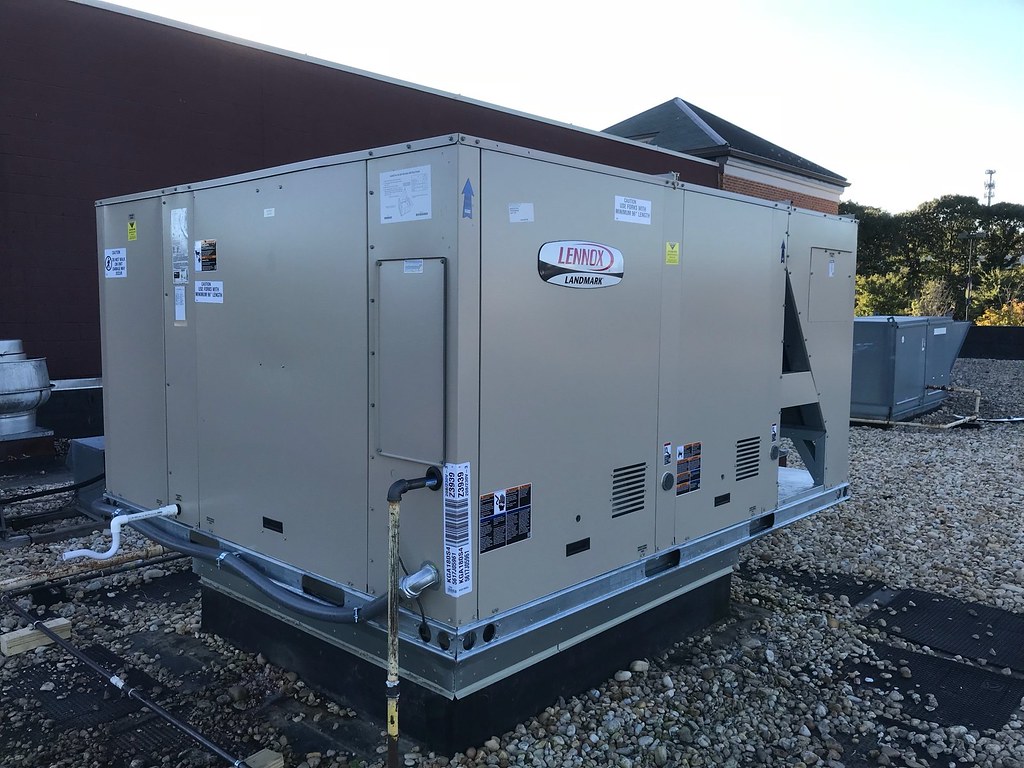
If a rooftop unit is already reporting runtime, temperature, or amperage data, models that flag "this compressor is behaving differently than it did last month" are proven technology, not hype. This is the legitimate core of predictive maintenance — and it only works if the underlying sensor data exists in the first place. No amount of AI marketing fixes a building with no monitoring hardware.
What's mostly marketing: "AI-powered" chatbots that just search a knowledge base
A lot of vendor-facing and tenant-facing chat tools labeled "AI" are really just a search box with a conversational interface wrapped around an existing FAQ or ticketing system. Useful, sometimes — but it's not doing anything a well-organized help center couldn't already do. If the pitch is "AI chatbot" and the actual function is "answers questions from a document," that's a UX improvement, not an intelligence upgrade.
What's mostly marketing: fully autonomous vendor selection and pricing
Several platforms now claim AI "automatically finds the best vendor at the best price." In practice, most of this is a weighted scoring formula on existing vendor data (rating, distance, past response time) — which is useful operationally, but it's closer to a spreadsheet with good defaults than genuine decision-making. The marketing language implies judgment; the reality is a rules engine. That's not necessarily a bad thing — rules engines are reliable — but operators should know what they're buying.
What's mostly marketing: "predictive" claims with no track record
Be skeptical of any tool that promises to predict equipment failure without being able to show you its track record on comparable buildings. Predictive maintenance is real, but it requires historical data and time to calibrate. A platform that launched eighteen months ago claiming it can predict a chiller failure six months out hasn't had the data history to prove that yet, no matter how the pitch deck frames it.
The practical filter
Before signing anything with "AI" in the pitch, ask three questions:
- What specific task does it automate, and how is success measured? Vague answers are a red flag.
- What data does it need to work, and do we actually have that data today? A lot of "AI-powered" tools quietly assume sensor or historical data most mid-size portfolios don't have yet.
- What happens when it's wrong? Every real system has an escalation path to a human. If there isn't one, that's a gap, not a feature.
AI in facilities management is genuinely moving the needle in a handful of specific places — dispatch routing, visual inspection, and equipment anomaly detection chief among them. Everywhere else, it's worth asking whether you're buying a capability or a word.
Looking for a facilities partner that uses automation where it actually helps and real people where it matters? Get in touch with VXO Services or submit a request through the client portal.